Author Archive

Simple Saturday ~ Book Review – The Overspent American

The Overspent American: Upscaling, Downshifting, and the New Consumer by Juliet B. Schor was published in 1998, but the information seems as relevant today as it did more than a decade ago. The book is geared toward middle and upper-income families, who seem to be caught up in a never-ending cycle of keeping up with the Joneses, no matter who the Joneses are.

“The Joneses” are our first error, according to Dr. Schor. In the past, our Joneses (or reference group) would be our neighbors, who all lived in houses about like ours, drove cars similar to ours, and likely had two adults and only one income. However, Dr. Schor asserts that today, our reference group is no longer our neighbors, many of whom we do not even know. For many people, the new reference groups are our colleagues and coworkers, who may hold financially very dissimilar jobs to our own, and our media “friends” that is, the fictional people we see on TV and relate to. It’s not uncommon for someone making $50,000 to compare their financial prowess to someone making well over half a million.

Dr. Schor also discusses the brands and types of items we buy as a way that we identify ourselves and show our “place” in the complex world. In my peer group, nearly all my friends have iPhones (“regular” cell phones are no longer good enough for us) despite the fact that they cost a minimum of $70 per phone per month, in addition to the purchase price. Everyone has a laptop, including the kids, many of whom have their own iPhones, as well. (Often the model that their parents have already upgraded from.) Plenty of our friends go on overseas vacations regularly. Frankly, it’s a lot to think about keeping up with. I’ve had several conversations with my daughters reminding them that because they attend a private school, they are automatically surrounded by people with more money than is typical, and that a trip to Africa or Denmark is not something that most families take on an annual basis. (In fact, I dismissed one expensive private school, which really was out of my financial league, in part because a European school trip is mandatory for all high school students. I didn’t go to Europe until I was 33, and I’ve only been a two overseas trips total. I don’t want my child going to school where it’s thought that such an experience is a must for teens.)

Finally, Dr. Schor talks about “The Downshifter Next Door.” This chapter focuses on telling the stories of various individuals who have moved away fromconstant pressures to spend – from people are embracing voluntary simplicity to people who have made commitments to stop buying so many material goods and services. I think this is the group that most 365 Less Things readers are trying to become a member of.

The last chapter contains nine points to help turn this financial, emotional, and environmental quagmire around. They are:

  1. Controlling Desire – Stay away from places where you’ll spend.
  2. Creating a New Consumer Symbolism: Making Exclusivity Uncool
  3. Controlling Ourselves: Voluntary Restraints on Competitive Consumption
  4. Learning to Share: Both a Borrower and a Lender Be – Love this one and definitely practice it.
  5. Deconstruct the Commercial System: Becoming an Educated Consumer
  6. Avoid “Retail Therapy”: Spending is Addictive
  7. Decommercialize the Rituals – Christmas is a religious and family holiday. Don’t let the mall tell you how it should be.
  8. Making Time: Is Work and Spend Working? Cut back on your spending and maybe you can change how and where you work.
  9. The Need for a Coordinated Intervention

Lastly, I’ll leave you with this discouraging thought - which to me especially embodies the politics of the state that I live in – although remember that knowledge is power:

“The intensification of competitive spending has affected more than family finances. There is also a boomerang effect on the public purse and collective consumption. As the pressures on private spending  have escalated, support for public goods, and for paying taxes, has eroded. Education, social services, public safety, recreation, and culture are being squeezed. The deterioration of public goods then adds even more pressure to spend privately. People respond to inadequate public services by enrolling their children in private schools, buying security systems, and spending their time at Discovery Zone rather than the local playgrounds. ” (p. 21)

By Cindy
Comments (41)

Cindy’s Weekly Wisdom ~ Gift Buying Traps – Don’t Fall In!

Cindy’s Weekly Wisdom

Perhaps you’re rushing about, buying some last minute gifts and stretching your brain to figure out what to purchase. Beware! There are gift buying pitfalls that you should avoid. They’re the route to clutter for the recipient and likely a waste of money for you. Read before you buy!

Trap One: Here Comes Another One, Just Like the Other One

Susie enjoys her subscription to Better Homes and Gardens, so she’d surely enjoy a subscription to Good Housekeeping as well. Leslie has a life-figures drawing book that she really enjoys. Surely she’ll enjoy another book and maybe an additional set of pens to go with it. The girls enjoy their set of wooden “paper” dolls, so I’ll get them another set, as well – maybe two because Look! How cute!

We are so easily swayed by this idea that if one is good, two is better, and three is best of all. Really? How about one is enough, two is too many, and three is way too many? I have a piece of garden art made by two local women that I absolutely love. I can see how it would be tempting to get me another piece – it seems like an easy way to a successful gift. But I love my piece. I think another would dilute the pleasure I regularly get from looking at this piece.

This is an especially easy trap to fall into if someone is a “collector.” How easy it is to buy yet another shot glass, Hummel figurine, or character salt and pepper shaker? Does the recipient really love these items, or has everyone gotten so used to giving them as gifts that it’s just become the thing to do?

Think twice before you purchase duplicate items.

Pitfall Two: The Thematic Gift

A theme-related gift can be the biggest mistake of them all. A girlfriend of mine is an avid gardener, and her sister gave her what must have been one the ugliest lamps ever with a garden scene as the base to commemorate her love of the out-of-doors. The sister was so pleased and excited, and my friend was so horrified that she lied and said that, sadly, the cat had knocked it over and broken it rather than confess that she’d returned the lamp as quick as she could.

A love of dogs does not equal the desire for a dog figurine. An enjoyment of travel does not equal an enjoyment of a souvenir t-shirt, especially one commemorating someone else’s travel.

Be careful when you follow the path of a theme; it’s easy to lose your way.

Pitfall Three: She loved it when she saw it at Franny’s house!

I love having fancy coffee drinks made by my friend Steve. But if Steve bought me a snazzy coffee maker like he has, I wouldn’t enjoy it nearly as much as I do the once-a-month coffee he makes for me. In fact, it’s the companionship of him making coffee for me that makes the coffee twice as good. Clearly, I couldn’t duplicate the experience at my house, yet how easy would it be to buy me this gift?

I think parents especially have a hard time avoiding this trap. I know I fell into it many times. Precious so loves playing with the fancy wooden dollhouse at the doctor’s office, that we buy her one for home. She loves the 10,000 Legos her friend has or the mini-trampoline, and we buy, buy, buy. But these toys are not nearly so enjoyed once they get to our house. Anyone else seen this movie?

It took me a long time to learn that it’s okay, even desirable, for there to be something you enjoy and not own it. That’s not part of our US culture, which tells us that if we like something, we should own it. But, really, it’s OK.

So, still have shopping to do? I may have just made your shopping trip more complicated, but I hope I’ve made your decision-making process a more successful one as well.

Today’s Declutter Item

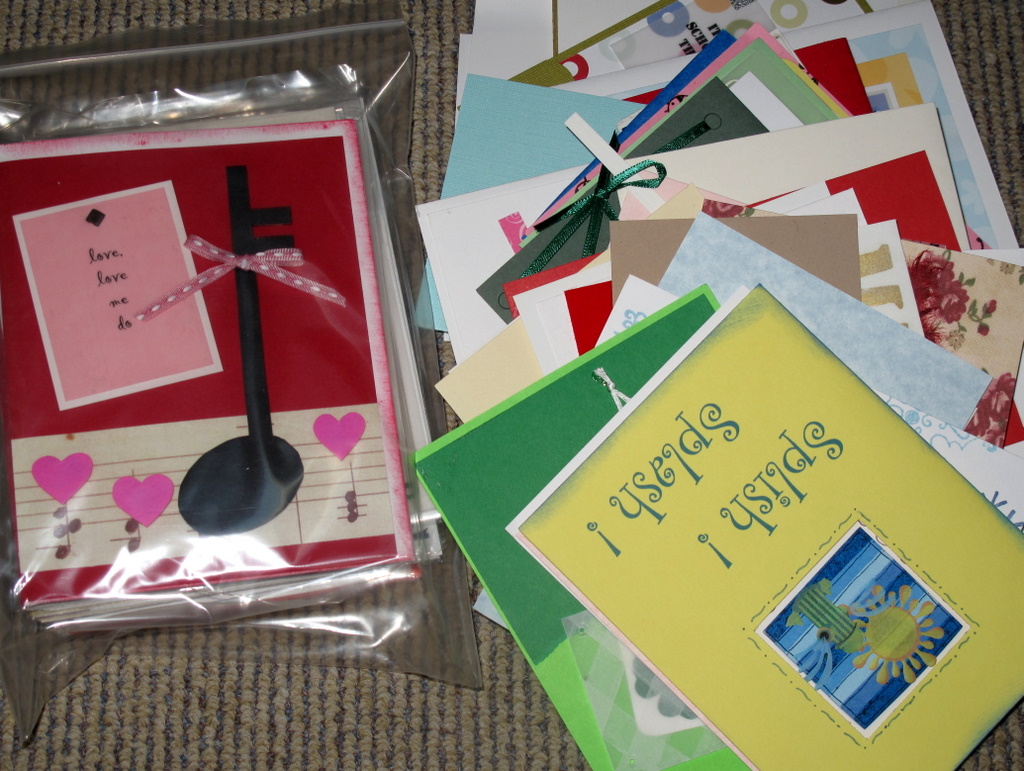
These cards were all handmade samples from a card swap I used to participate in at one of the craft stores I worked in in America. They kept getting passed over in preference for other more suitable cards. I finally decided that they were never going to get used so I packaged them up and sent them off to the thrift store.

Craft Clutter Be Gone

Something I Am Grateful For Today

Jamie Oliver’s ~ My Favourite Curry Sauce.  C’est très bon.

“In daily life we must see that it is not happiness that makes us grateful, but gratefulness that makes us happy.” Brother David Steindl-Rast

It matters not how fast I go, I hurry faster when I’m slow

Comments (32)

Simple Saturday – Cindy’s Cord Control

Cindy’s simple solution to cords and chargers out of control and either tangled on the desk top or snarled in the drawer. A great use for the over-abundance of plastic containers wasting space in your kitchen.

Cindy's Cord Control

Comments (28)

Cindy’s Weekly Wisdom ~ Preserving Memories or Creating Clutter?

Cindy’s Weekly Wisdom

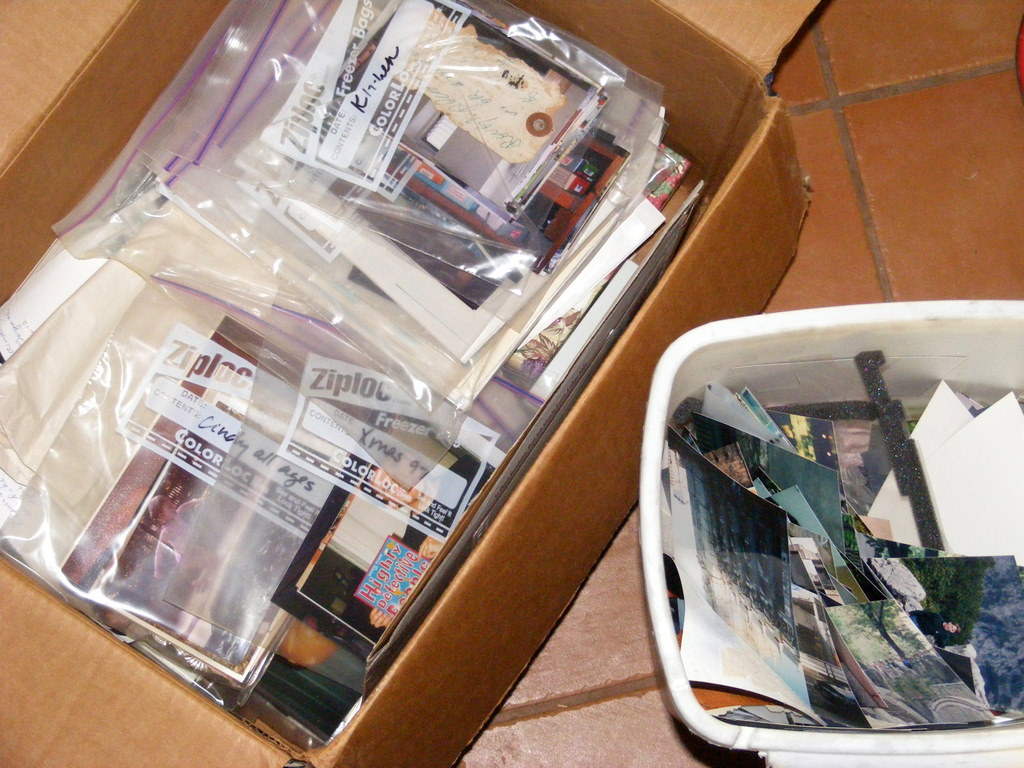
We just passed Thanksgiving (in the US) and are coming up on Christmas and Hanukkah,  and I am willing to guess that December is the most heavily photographed month of the year. Well, last month, I spend an hour sorting through a huge box of photos and memorabilia. There were packets of organized photos from my college years, but beginning with my wedding (1997), nothing was organized, culled, etc. What a miserable experience!

"The photos that survived this culling and an outfit that was in box that belong to my Grandmother Clara."

Here are the things I learned:

  1. If you don’t sort through your photos when you get them, it will not get easier 14 years later.
  2. If you don’t label your photos, it will not get easier 14 years later.
  3. If you’re not motivated to put your photos in albums now, you won’t be any more motivated in 14 years.
  4. You will wonder why in the world you took certain photos. Did they once mean something to you?
  5. You may experience a sharp, sad feeling of regret when you come across a lovely photo of yourself and someone who is no longer a part of your life.
  6. Your digital camera takes far better pictures than your film camera ever did.
  7. What in the world was the point of getting every photo printed in duplicate?

And the changes I will make in my photographing habits:

  1. I will use my delete button much, much more.
  2. I will transfer my photos into Picasa and label them when I download them, deleting more as necessary.
  3. I will remember that just because I can take photos of every conceivable moment of an event, that doesn’t mean I should.
  4. I will leave my camera at home at times so that I can fully appreciate the event with all my senses, not just through the lens of a camera.
  5. I will take fewer photos of things and more photos of people.

I hope you have a great holiday season and that you use common sense with your camera. Remember, each photo you take is one that you have to process in some way. If you don’t, instead of preserving memories, you’re just creating clutter.

"The photos still to be sorted and more than 2 pounds of photos that went into the trash. These were mostly duplicates, lousy shots, and photos of people I did not (or did not want) to remember."

Today’s Declutter Item

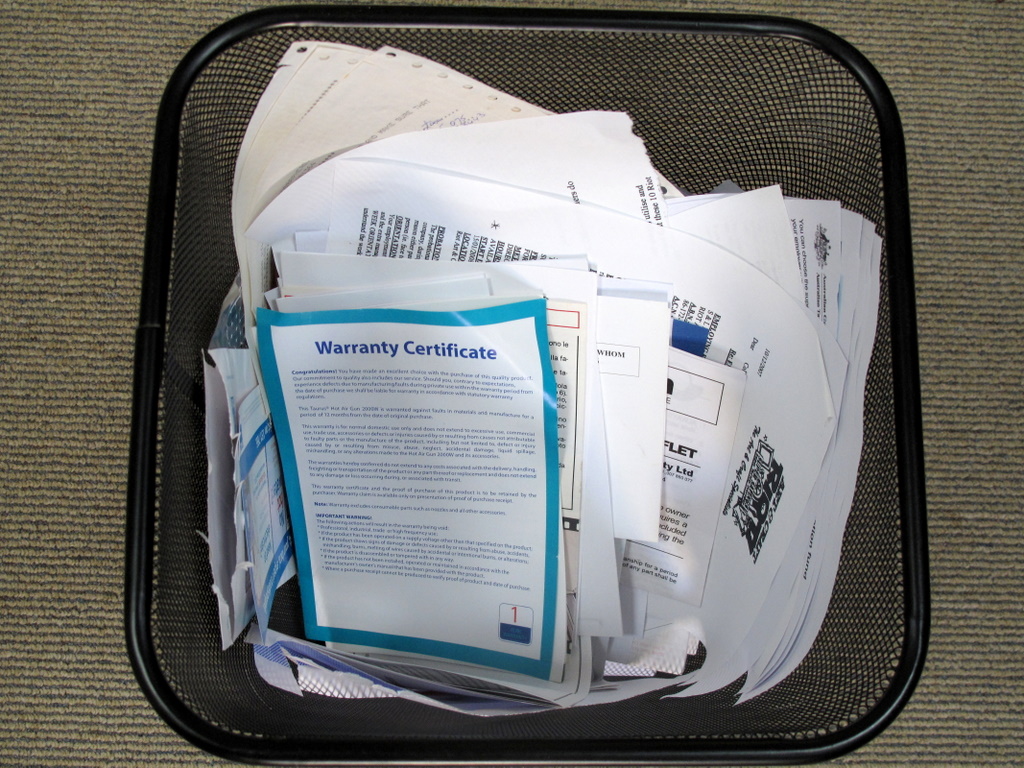
I had another sweep through our paper files and found more out of date paper clutter. This is a task that requires attention on a regular basis. 

Paper Clutter ~ Decluttered & Recycled

Something I Am Grateful For Today

Last year, as a thank you gift, a friend gave me a blueberry bush. She knows I hate clutter so she gave me something lovely for the garden. Earlier in the season I replanted it into a lovely big pot I had picked up off the side of the road. I am so excited that is has grown so beautifully in its new location and I harvested my first crop this week. So, it was only two blueberries but they were juicy, sweet and delicious and I am expecting greater things from it next year. Thanks Jen for my lovely plant I am really enjoying watching it grow.

“In daily life we must see that it is not happiness that makes us grateful, but gratefulness that makes us happy.” Brother David Steindl-Rast

It matters not how fast I go, I hurry faster when I’m slow

Comments (27)

Simple Saturday – Say NO to Freebies

The Rule of Reciprocity

by Maria Lin, Real Simple, Dec. 2011 issue

About 40 years ago, Disabled American Veterans, a Kentucky-based nonprofit, had a bright idea: The charity decided to send potential donors free personalized address labels. After the labels arrived in mailboxes across the nation, contributors to the group nearly doubled – jumping from 18 percent to 35 percent of those solicited. Why was this marketing gimmick so successful (and copied by countless others)? Because of a phenomenon called the rule of reciprocity.

The concept is simple enough: When people are given something for free, they typically feel obliged to make a gesture – or even a purchase – in return, says Steve Martin, a coauthor of Yes! 50 Scientifically Proven Ways to Be Persuasive (Free Press, $15) and director of Influence at Work UK, a consulting company in Luton, England. The principle applies even when the free item is unsolicited and inexpensive, as Cornell University psychology professor Dennis Regan learned in 1971. In his seminal study, he found that when people were offered a free soda by a student, they bought almost twice as many raffle tickets from him as did those who had received nothing. That’s why you’re so often besieged by offers of free samples, complimentary gifts with a purchase, or amenities like chocolate or bottles of water just for entering a store. The acts of generosity may seem like good, old-fashioned customer service, but they actually prompt you to lay down cash, according to Martin.

So remember this counterintuitive piece of advice the next time you’re at the mall or the grocery store: If you want to stay on budget, say no to free stuff.

This Simple Saturday post was contributed by Cindy as was the amusing cartoon below.

A Mallard Fillmore Cartoon


Comments (26)

Cindy’s Weekly Wisdom ~ Don’t Be Fooled into Buying for Charity

Cindy’s Weekly Wisdom

What do all these things have in common?

  • Buy (Red): 10 to 50% of the proceeds of which go to eliminating AIDS in Africa.
  • Book Sale: 20% proceeds go to your child’s school!
  • Would you like to buy some wrapping paper to support our band trip?
  • How about a beautiful $200 beaded bracelets that supports JDRF? An undisclosed portion of the proceeds are donated to the organization.
  • Rubber bracelets for sale for every cause possible. Typically $1 each.

Obviously, these are all ways of coaxing a donation out of you; that is, providing a rationalization for a purchase that you might not have otherwise made. A blunter way of saying it: These sales feed on people’s desires to get something back for their donation or circumvent our reluctance to make a donation in the first place.

The book sale example is from my own life just last month. My daughters’ school sponsored a book sale at a local book store, and 20% of the proceeds went back to the school. As you probably know, I rarely buy books and certainly not new books. But there I was, shelling out $65 for four children’s books. (Yikes! Thus reinforcing why I prefer the library.) The return on my investment to the school? $13.00. They would have been way better off if I’d just handed them $65. But, quite honestly, I wouldn’t have, because my husband and I just made a large donation to the school for our annual fund drive. The book fair was really fun – there were special readings and meet the author events, the honors orchestra (including my eldest) played, and it was a great opportunity to socialize. Also, a lot of the parents at our school do buy books and lots of them. I was surprised my friend G could even carry her basket of books it was so loaded up! Nonetheless, for me, it was really a moment of buying something I did not particularly want or need in order to make a donation to the school.

One of the things I like about our school fundraising gala, which happens in the spring,  is the “fund-a-need” auction. The Head of School selects something that the school needs (last year, a bus), and at the gala, you can bid in any amount toward the purchase of the need, but you get nothing in return except knowing that you contributed to the school.

Dan and I tithe bi-weekly to our church. The bottom of the form that we receive tallying our donations says something like “No goods or services were exchanged for these donations except spiritual ones.” I like that.

So next time you’re confronted with the opportunity or desire to buy something to support a charity ask yourself

  1. Do I really want and need this item?
  2. What portion of my sale is really going to the organization?
  3. Wouldn’t this charity be better off if I just handed them the amount of money I intended on spending anyway?

Today’s Declutter Item

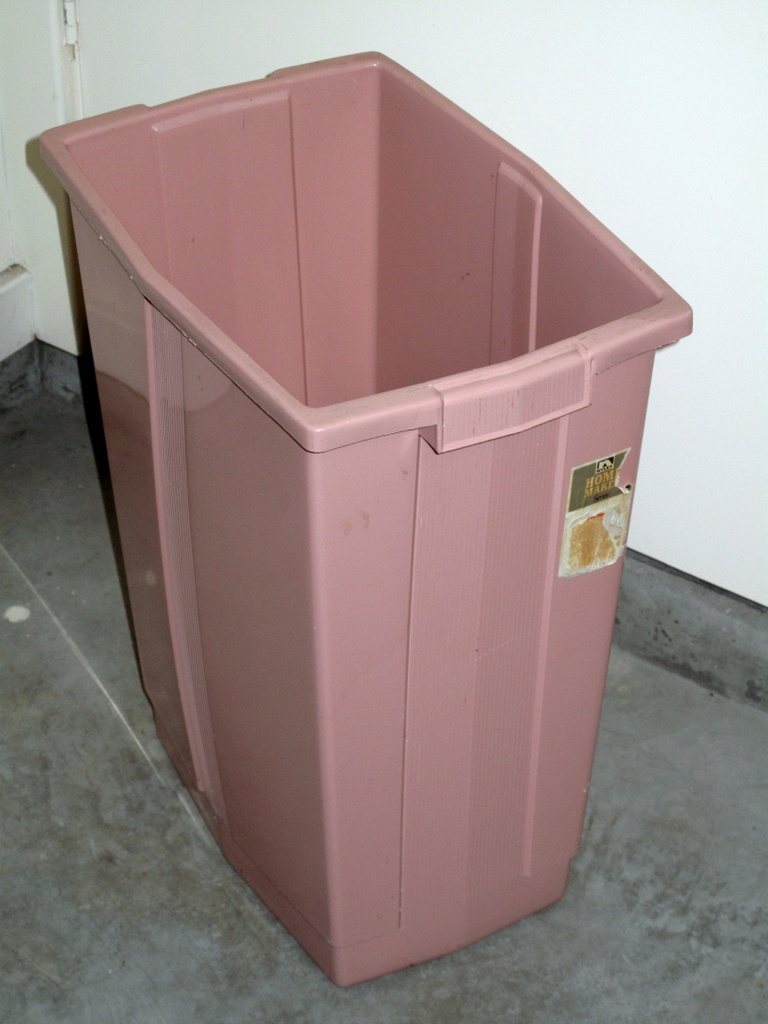
During my recent reshuffle of the garage due to space opening up on my shelving units I decided that this bin is really not needed. We don’t generate enough trash in the garage to warrant keeping it especially since the outside bin is so close by. That’s one more large item that isn’t taking up space.

One too many garbage bins

Something I Am Grateful For Today

My parents made it home safe and sound after their visit. It was a trying trip for them as my mum was really not well, but they are home now and can recuperate in the comfort of their own abode.

“In daily life we must see that it is not happiness that makes us grateful, but gratefulness that makes us happy.” Brother David Steindl-Rast

It matters not how fast I go, I hurry faster when I’m slow

Comments (16)

Simple Saturday – Corinna’s Color Coordinated Bookshelves

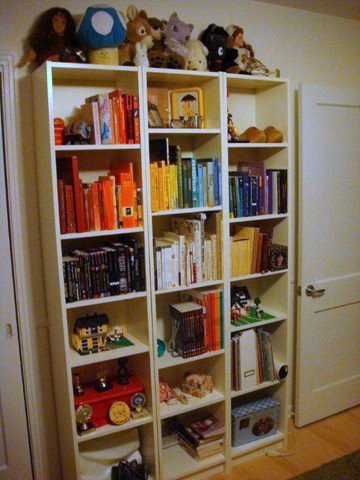
I wrote about bookshelf organization for Cindy’s Weekly Wisdom this week, and I showed my friend Corinna’s living room book shelf. Here are photos of her ninth grade daughter Audrey’s color coordinated shelves, along with the letter Corinna emailed me explaining the hows and whys of the color coordinated books.

Audrey’s colour coordinated bookcase.

The color book order is only about looks.  We’ve just retrained our brains to visualize what a book looks like, and therefore what color it is, when we want to find a book.  That’s actually easier than it sounds.  It also reacquainted me with a lot of books I hadn’t looked at in a long time and helped me decide which ones to donate.

How we came to display our books like this is fairly involved: The girls used to share a bedroom and our other bedroom was an office/guest room.  When it was time for them to each get their own room, we had to incorporate a computer/desk area into our living room.  I tried to do this in an attractive way by hiring a cabinetmaker to create the cabinetry and the floating shelves.  And when those new shelves were installed, I just couldn’t put all our books up there without trying to do justice to the beauty of the shelves.  The color thing was on a lot of design blogs like Apartment Therapy at the time.

I also have books on another bookcase next to the TV.  The color-ordered ones are mostly fiction, while non-fiction is in the other case. In terms of decluttering, I would say that color-ordering of books is only helpful in that it makes how the books look a priority, which can help in reducing the number. I have to edit the books every so often, because when new ones come in, old ones have to go out.

I hope this is helpful – love the blog, btw!

Love the last line. Thanks Corinna!

Comments (8)

Happy Thanksgiving & Black Friday Advice

Colleen and Cindy wish all our American readers and the good folk of Leiden (Netherlands) a very happy Thanksgiving

May you eat all you want and not gain an ounce. Now that would be something to be grateful for.

A little more Wisdom from Cindy

Photo credit http://gengame.net/

In the United States, Black Friday is the day after Thanksgiving, the day that marks the start of the “holiday shopping season.” It’s a day of amazing sales and deep discounts. Some stores open as early as 4:00 am, with people staying up all night in the parking lot so they can be the first in the door, as the very best sales (aptly named “doorbusters”) are only available in limited quantities. In other countries, Boxing Day is similar.

Probably everyone who lives in the US is familiar with Groupon and other coupon sites. A few weeks ago, Living Social Deals offered a half-price VIP Black Friday shopping extravaganza at the mall nearest to my house. Normally $20, this deal for two shoppers was discounted to $10. What did you get for your $10? Parking in a reserved area of the mall, access to a VIP rest and refreshment area, and transportation on an electric cart to and from my car. I’m still marveling at the cleverness of the mall at making just shopping there something that you can pay for.

Here’s the take away message for Black Friday. If you want something, have planned for, made a smart determination that this item is needed by you, and you can afford it, feel free to purchase that item while it’s on sale. Otherwise, stay home. Rest. Enjoy your family. Eat leftovers. Watch a football game. Read a book. Just because the stores are desperate for you to purchase doesn’t mean that you have to be desperate to buy.

May your Friday not be Black

Today’s Declutter Item

Instead of risking getting trampled to death on Black Friday why not buy secondhand on eBay. You’ll still get a bargain plus buying preloved items is better for the environment. I recently sold these Peanuts Pez dispensers on eBay and made three people very happy. The buyer who was happy to add them to his collection. My son because the money went into his bank account. And me because they are one less item of clutter wasting space in my home.

Peanuts Pez sold on eBay

Something I Am Grateful For Today

My parents made it to me safe and sound and now I get to enjoy then for the next five days. 


“In daily life we must see that it is not happiness that makes us grateful, but gratefulness that makes us happy.” Brother David Steindl-Rast


It matters not how fast I go, I hurry faster when I’m slow

Comments (29)

Cindy’s Weekly Wisdom ~ How do you store your books?

Cindy’s Weekly Wisdom

Books are a collecting weakness of many people. I know that in my early 20s I dreamed of having a library – ideally one with a rolling ladder. Then I moved every year for four or five years and put that foolish idea behind me. Books are heavy!

Photo credit www.atticmag.com

I’ve been a library user my whole life. I remember when I was a girl going to a particularly library that kept the Nancy Drew novels separate from the rest of the books – heaven! And I have clear memories of Library Period in elementary school. Back then, I read biographies of famous females. Annie Oakley, Mary Todd Lincoln, Abigail Adams, Florence Nightingale, Amelia Earhart, Marie Curry – These were the ladies (along with my mother) who showed me what a smart, determined female could accomplish in this world. I even have a library card for the Wyoming, Iowa library (population: not a lot) where my extended family is based.

Why even buy books, especially new books? I’ve got to tell you, that’s a question that I reflect on frequently, as I am far from the only reader in my circle of friends and acquaintances. I am, however, one of the heaviest library users. I buy books, sometimes new and often used, for my daughters, especially the eldest one, because she is a voracious reader and reads and re-reads whatever is on her shelf. She has several series that she enjoys, and we have the whole sets of these (Ranger’s Apprentice, Gregor the Overlander, Harry Potter, Warrior Cats, Persey Jackson, etc.)

As for myself, the books I own fall into a couple of categories: medical (espeically diabetes), dictionaries and reference books, Spanish and German language books, gardening and the natural world, religion, and novels that I enjoyed enough that I wanted to own then and knew I would reread them. (Almost all of these were first read as library books, and I decided they were so terrific, I had to own them.) Dan has a lot of computer, science, and programming, which are stored in his office. These are tough because most of them cannot be checked out of the library and are fairly expensive because of their low print runs, but their usefulness passes quickly as technology rapidly changes. Dan tries to think hard before he makes a purchase. I think he’s only bought two books this year. (He also subscribes to a number of science magazines. These are passed to a science-minded friend when Dan is done. When the friend has read them, they go to the free magazine exchange shelf at the library.)

Nonetheless, whether you own lots of books or few, you undoubtedly own some, and there are various ways of storing them, which might be more and less useful to you.

Subject

First up is my system. I mentioned the various categories of books that I own above. They are stored, like with like, on the shelves. The left hand book shelf is all non-fiction. The right hand shelf is fiction. The bottom two shelves are the kids’ overflow books, primarily series, the third shelf is my books, and the top one is Dan’s small science fiction and fantasy collection. When I buy a book, it has to fit onto the shelf with its peers. If there isn’t room, then someone’s got to go. My system isn’t necessarily one in, one out, but there has to be room.

Cindy's Library

By Color

Colour coordinated book storing system

My friend Corinna has a beautiful and artistically decorated house that includes a shelf of books organized by color. I found this so fascinating that Simple Saturday’s post will be dedicates to what Corinna told me about the whys and hows of a color-coordinated organization system.

Other systems

Alphbatically by author

From most to least liked (This was my eldest daughter’s idea, and she’s sure she could do it on her shelves. I know I could not on mine.)

Chronologically from childhood favorites to books on menopause and carrying for aging parents

Using Library Thing or other on-line software, although this is more geared to helping to keep track of what you own rather than how it is organized on the shelf.

A Kindle Instead?

Do not flame me! I don’t get Kindles. Ok, I know what they’re about (download lots of books, portable, easy to read screens, long battery life, some libraries now have Kindle downloads), but I don’t understand why they’re needed, except possibly by those who travel extensively and for long periods of time. Perhaps it’s because I don’t buy books to begin with, so buying them instantly on the Kindle is no advantage to me.

I wondered if e-readers were more eco-friendly than traditional books. I suspected not. Kindle owners claim that they just bought the Kindle and now they’re buying downloads. Yeah, but do you know how much energy goes into making one of those (and all the electronics we love)? I heard on NPR last week that half the energy involved in the World Wide Web is devoted to the making of the equipment. And I know that people will be replacing their Kindle every few years. Electronics come and go in fashion and utility, and Amazon is certainly invested in making a better Kindle so you’ll want to trade your old one in.

On the other hand, the manufacturing of paper is a dirty business, and books are heavy to ship. Turns out that there is no clear answer to this question, and if you want to read all about it, I recommend you explore the website Eco Libris.

My personal bottom line on a Kindle? Any tool that only does one thing is not as good as a tool that does sevearl things. I’d buy an iPad or similar devise. Tech Crunch outlines your choices.

My personal bottom line? Visit your local library and if you must own it, buy it used at your local book reseller or from Amazon.com.

Today’s Declutter Item

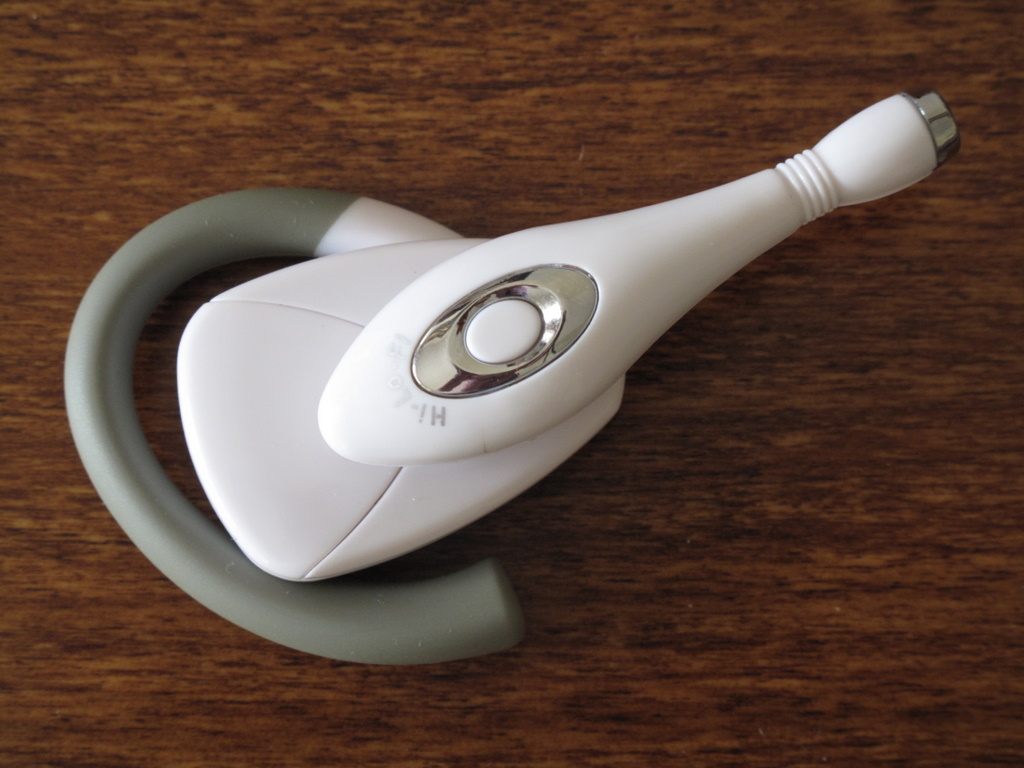
Since we are on the subject of books why not make today’s declutter item this ear mounted reading light. I never wake up in the middle of the night hankering for a good read. Usually it is the bathroom I’m needing and then I just go back to sleep. So I don’t really need this light cluttering up the bedside drawer. Off to the thrift store with you little light.

Ear mounted reading light

Something I Am Grateful For Today

Today I am grateful that my house is clean and tidy and all my other chores are out of the way, even the ironing. Now I can devote the next five days to enjoying my parents visit. 

“In daily life we must see that it is not happiness that makes us grateful, but gratefulness that makes us happy.” Brother David Steindl-Rast

It matters not how fast I go, I hurry faster when I’m slow

Comments (86)

World Diabetes Day – November 14

An important awareness post by Cindy

Today’s post has nothing to do with declutter and everything to do with another subject dear to my heart.

As many of you know, my daughter Clara is one of the approximately 3 million people in the United States with Type 1 (juvenile) diabetes. She was diagnosed at her 10th birthday check up. We had no idea that there was anything to be concerned about. Clara had gained weight during third grade until she had become worrisomely plump. In the months leading up to her 10th birthday, she had slimmed down and shot up in height, just like a healthy girl should. We were all breathing a sigh of relief that the “baby fat” was gone. Imagine my shock when our pediatrician told us that Clara had lost 15 pounds in the prior 3 months! The reason took less than one minute to uncover.  You can be sure that was a life-changing day for everyone in our family.

What is diabetes? It has to do with sugar, right?

In diabetes, the body no longer produces insulin (Type 1) or the insulin that is produced is poorly used (Type 2). Insulin is a necessary bridge to transport simple sugars out of the blood stream and into the cells, where it is used for energy. No insulin equals no energy in the cells and an unhealthy build up of sugar in the blood stream. The sugar that the body uses for cellular energy comes from all consumed carbohydrates including carbs from bread, potatoes, fruit, some vegetables, rice, pasta, milk, and yes … sugar. For the diabetic, a bagel is not necessarily a better choice than a cookie.

My neighbor got diabetes when she was a little girl, but my grandma has it too

There are several types of diabetes, and they are not identical. The two main types are:

Type 1 diabetes, also called insulin-dependent or juvenile diabetes. This is what Clara has. It is important to note that the name “juvenile” is misleading for two reasons. 1) Half the people who are diagnosed with Type 1 diabetes are over the age of 18 (although typically younger than 35) and 2) anyone who gets diabetes as a child will still have it as an adult.

Type 1 diabetes is an auto-immune disorder where the body’s immune system attacks and kills insulin-producing cells. The reason for this is not known. There is higher rate of Type 1 diabetes in families with the illness, but most people who are diagnosed, including Clara, are the only people in their family with the disease. It is incurable and without repeatedly, daily injections of insulin, it is fatal.

Type 2 diabetes is also called adult-onset diabetes and accounts for at least 90% of all cases of diabetes. The body still produces insulin although sometimes in lower amounts and what is produced is used inefficiently by the body. The diagnosis of type 2 diabetes usually occurs after the age of 40 but can occur earlier, especially in groups of people with high diabetes prevalence, and there is an extremely strong genetic link with Type 2 diabetes. Unfortunately, Type 2 diabetes can remain undetected for many years and the diagnosis is often when complications - damage from chronically higher blood sugar - begins to manifest. It is often, but not always, associated with obesity, which itself can cause insulin resistance and lead to elevated blood sugar levels.

Risk factors have been associated with type 2 diabetes and include:

  • Obesity
  • Diet and physical inactivity
  • Increasing age
  • Family history of diabetes
  • Ethnicity, especially African American, Mexican American, and Native American people

I worry I might have diabetes. How do I know?

Individuals can experience different warning signs, and sometimes there may be no obvious warning, but some of the signs of diabetes are commonly experienced:

  • Frequent urination
  • Excessive thirst
  • Increased hunger
  • Weight loss
  • Tiredness
  • Lack of interest and concentration
  • Vomiting and stomach pain (often mistaken as the flu)
  • A tingling sensation or numbness in the hands or feet
  • Blurred vision
  • Frequent infections
  • Slow-healing wounds

A blood sugar (glucose) test can be completed within a minute with just a finger prick. You can often have it done at health fairs or at your doctor’s office. In the US, everything you need to monitor your sugar yourself is available over the counter at the pharmacy. You need a meter (usually about $20) and test strips (sold in bottles of 20 or 50, usually costing $1 each). Normal fasting blood glucose is below 100 mg/dl. A person with prediabetes has a fasting blood glucose level between 100 and 125 mg/dl. If the blood glucose level rises to 126 mg/dl or above, a person has diabetes.

Know your sugar and track them! The onset of Type 1 diabetes is fast and furious, but Type 2 can be slow, slow, slow. You may not be aware of it, but all the while, damage is occurring.

Today, there is no cure for diabetes, but effective treatment exists.  If you have access to the appropriate medication, quality of care and good medical advice, you should be able to lead an active and healthy life and reduce the risk of developing complications, which include:

  • vision problems including blindness
  • kidney problems, including complete failure leading to the need for dialysis
  • numbness of the feet and hands
  • wounds that heal slowly and become infect, sometimes leading to amputations
  • increased high blood pressure
  • increase risk of heart disease

Yikes! I don’t want that! What can I do?

Since the causes for Type 1 diabetes aren’t know, there’s also no way to prevent it. The good news is that it’s relatively rare and unlikely to strike those over 35. To prevent or assist in managing Type 2 diabetes:

  • Stay active
  • Maintain and healthy weight
  • Eat healthy
  • Do not smoke
  • Monitor your sugar levels and be aware of complications possibly developing

The majority of this information can from my own knowledge and the website of the International Federal of Diabetes, which along with the World Health Organization, sponsors World Diabetes Day annually on November 14, the birthday of one of the researchers who isolated insulin, allowing those with Type 1 to live past diagnosis.

Comments (16)