Cindy’s Weekly Wisdom ~ Little Free Library

223095_10150231999798475_514828474_8654435_4490445_n

Cindy

Just a short post today to tell you that my Christmas present finally got finished. My husband Dan and my friend Dan built a Little Free Library for me, out of scraps we had in our garages, and my friend Holly painted it to match our house. It only took contributions from a couple of people, and we were in business – the business of book exchanges.

Little Free Library was started by a Wisconsin man in 2009 as a way to honor his deceased mother, a teacher. Now there are thousands of Little Free Libraries in the United States, and some in other countries, as well. It’s really just a book exchange – in my front yard. I tell people “Take a book, leave a book. Take a book, return it later. Take a book. Leave a book.” We’ve had no trouble keeping it stocked, and we’ve had quite a few exchanges in our first week. It’s been so gratifying to see neighbors stop by or to receive an email from a neighbor I’d never met telling me what she’d taken and what she’d left. One neighbor even brought me some books and some cuttings for my garden after seeing my house on Google Maps.

I promoted the library on our neighborhood listserve, a Yahoo group that frankly, I think every neighborhood should have. It keeps us connected, lets us know what’s going on in the ‘hood, and is frequently the starting point for “one man’s trash is another man’s treasure” swaps. The first day the library was finished, I listed all the titles we have on the listserve in an email titled “Need something good to read this weekend.” Most of the original books from that email have already been swapped.

I love it!

Downloads17

Today’s Mini Mission

Do you have any electronic equipment that no longer works or you just don’t use anymore. Perhaps it is time to sell it off or dispose of it appropriately.

Eco Tip For The Day

Don’t just throw old electronic equipment in the garbage. Investigate eWaste drop off’s sites or events in your area. You local government web site will usually carry this sort of information.

It matters not how fast I go, I hurry faster when I’m slow

Comments (41)

Readers Story ~ Reuse/Recycle by Sanna

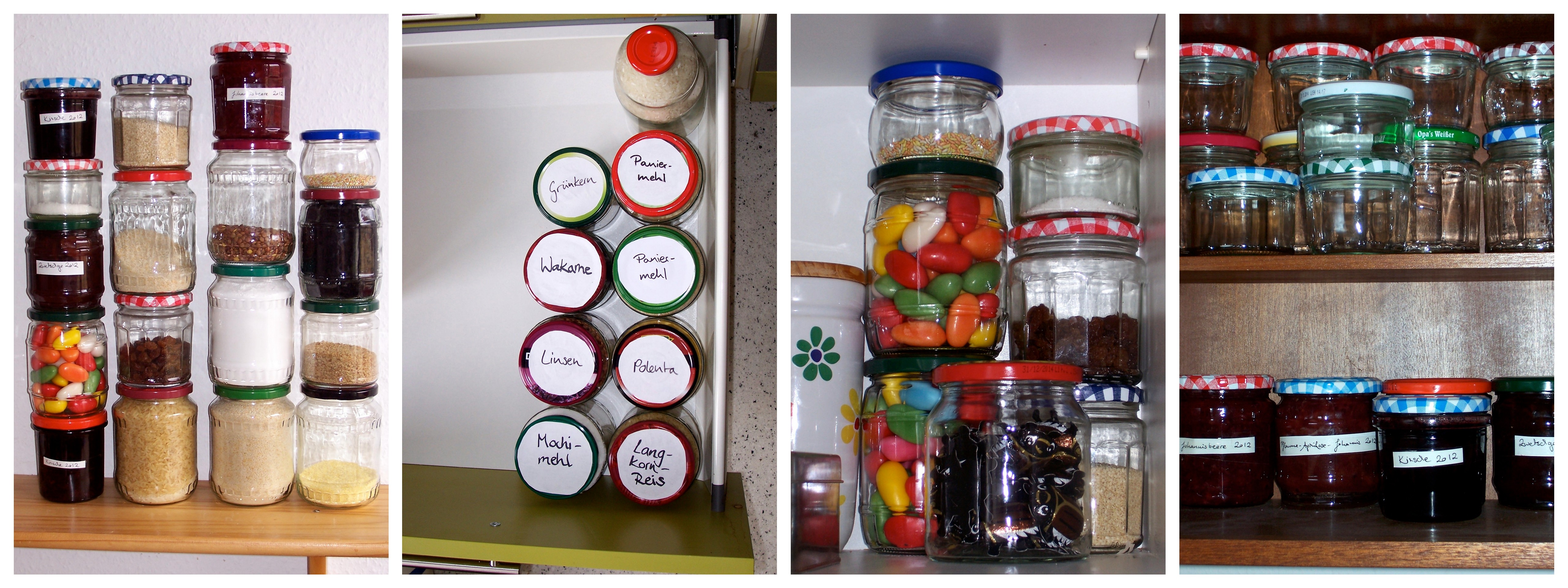
I’m rather proud of my “new” recycled pantry organization – i.e. mason jars, and I thought, I might share this with you.

For the last year or so I worked at collecting jars with lids of the same size, in order to be able to stack them and to make canning easier. There are two very common lid sizes in German supermarket jars and I chose the wider one of the two (also to make refilling easier).

They sell pickles, canned veggies, canned meat, jam and so on in these jars over here, so there is a variety of sizes. My collection has small jars that hold about 200ml and big ones that hold 750ml.

Downloads14As you can see I use the smaller ones for canning and for baking ingredients (raisins, nuts, almonds, etc.), while the bigger ones hold grains or flours.

I like about them that they’re pretty much “one size fits all” which means, if I have an open package of nuts, I can fill the remainders in a tightly closing jar that holds off bugs and stacks nicely in my pantry with the other jars. When there are no nuts (or whatever) in the house though, the jar goes back to its colleagues and doesn’t call for being refilled immediately. Those sweets you see in the pictures are an example of that. I will probably not replace them once they’re used up. When it’s canning season over here I might very well fill all those little jars with jam that served well as containers for seasonal spices in the christmas season. I also used them for storing the over-abundance of self-made christmas cookies last year (for the few weeks until they were all eaten), as well as for transporting food to friends or picknicks. They also do well for storing leftovers (or single egg-whites) in the fridge, as shakers for sauces (anyone else shaking their salad dressing?) and for cooking experiments like making my own joghurt or whatever.

I also occassionally cook in them (the ones with the straight sides do great for pudding).

What I really love about them though is that they all are recycled, I didn’t buy them on purpose, I just used packages of the food I bought anyway. Also, most of those glasses are made of recycled glass. And just as naturally as they came for free, they can be recycled any time. And if I transport food in them to friend’s houses I don’t have to care about getting the containers back. I can give them away just as freely as I got them in the first place.

Today’s Mini Mission

Declutter something you keep for another’s benefit. This often happens with grown children. For example Dad has a bunch of useful tools that he no longer uses but his three sons often come over to borrow them ~ In this case divvy them up between the sons and let them borrow from one another. If they don’t want to do that then feel free to sell them or give them to someone who does want them. Once again your home isn’t a storage unit or a free hiring service.

It matters not how fast I go, I hurry faster when I’m slow

Comments (24)

Cindy’s Weekly Wisdom – Alternatives to Gift Wrap

Cindy’s Weekly Wisdom

Cindy

I am coming to the end of a multi-year Use It Up Challenge: To use up all the copious amounts of wrapping paper that I purchased on sale after Christmas like clockwork every December 27.

TreeHugger has a great article on holiday waste and sites estimates of 4 million tons of wrapping paper and gift bags thrown away.

My girl friend Corinna has made cloth bags that she reuses year after year. She does a lot of sewing and cloth crafts so my guess is that she was able to make these bags with remnants. Here are great step-by-step instructions; even a non-sewer can follow along.

My sister-in-law, who lived in Taiwan until fairly recently, sometimes wraps her gifts in cloth, using a Japanese technique called furoshiki. Apparently the origins of this art for were to carry one’s lunch or other personal items – basically a tote sack made from a piece of cloth. There are lots of instructions on the Internet as to how to wrap differently shaped objects.

The simplest recycling/wrapping project I know is something we call Map Wrap. Map Wrap is a variation on the once popular Sunday Comics wrapping, but it uses old maps. As part of my decluttering, I cleared out all maps that were more than 10 years old, which was a big handful. I’ve been using them to wrap and I love the intricate, cheerful designs and colors. Most people seem to think that they look pretty cool.

I have also heard of taking a chip bag, which usually has a shiny silver interior, wiping the oil away, and wrapping the gift silver side out. I’ve never done it, but the ladies who told me about it do it regularly – especially for kids gifts. They say that most kids tear off the wrapping so quickly, they never even notice that it says Lays Potato Chips on the inside!

Have you thought of ways to reduce your wrapping clutter?

Today’s Mini Mission

Declutter something that can be recycled or repurposed by someone else. (Newspapers, magazines, old sheets, old pillows, old towels, bicycle parts, pieces of timber or metal…)

Today’s Declutter Item

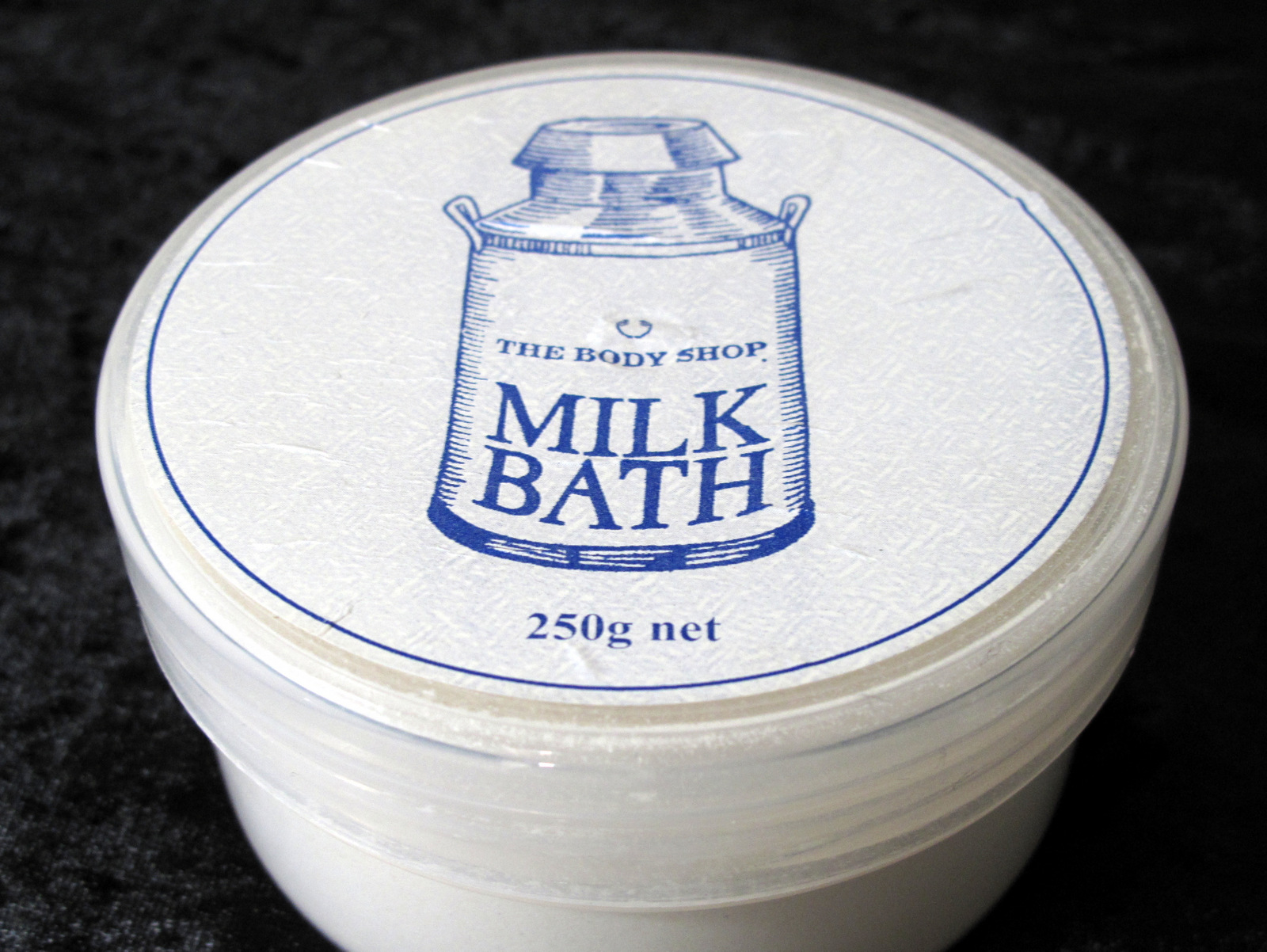
Bath Products

Eco Tip for the Day

Greening your workplace ~ If you use a printer in your workplace, only print what really needs printing and print double sided if you can.

It matters not how fast I go, I hurry faster when I’m slow

Comments (43)

Cindy’s Weekly Wisdom – One Person’s Trash Is Another Person’s Treasure

Cindy’s Weekly Wisdom

Cindy

One person’s trash is another person’s treasure. That’s a saying we’ve all heard and probably have said. I first truly appreciated the saying at the first garage sale I ever held as an adult. As we raised the garage door at 8:00 am, shoppers began ducking under the rising door, eager to be the first inside. The very first thing that sold was a men’s electric razor for $5. The next thing to sell was a rusted kitchen knife for 10 cents. That’s when I first came to believe that you really can sell anything.

But, of course, decluttering doesn’t have to be about selling, as we have discussed many times on this blog.

I think there are two things you need in order to make any trash to treasure (T2T) work. 1) a place for your “trash” to go and 2) and more importantly, a willingness to find that place.

Let’s start with the easiest examples.

Have Trash: your old clothes. Make Treasure: donate them to the thrift store. That’s how you turn clothing T2T.

Okay, duh Cindy, that’s obvious, but no one would want my XX. You think not? Let’s recall some of the tougher items I’ve decluttered.

Have Trash: 3 pounds of sour cream with about 1/2 C missing and a bottle of salad dressing with one salad’s worth missing. To make this into treasure, you are probably the biggest obstacle. Your embarrassment about offering slightly used food to others is holding you back from making this into treasure. I took a deep breath and offered these two things on my neighborhood list serve. Both had multiple people willing to take them off my hands. The person who took the sour cream just happened to be having a party that weekend and was pleased to have a base for various dips. She made a sour cream cake with the rest.

Have trash: Things which can be recycled, but it’s inconvenient. To make treasure: It’s your responsibility to dispose to things responsibly and in the best way your community demands. Batteries can be saved up and returned to the battery store, Home Depot or Lowes, and probably your community recycling center. The same with Compact Florescent Lightbulbs (except they go back to the lightbulb store, not the battery store). Try this mindset: You were perfectly willing to drive all over town to acquire these items. You should put at least this much effort into recycling them. (Or you can make battery art, like this creative soul.)

Have trash: Sentimental item you dislike. Make treasure: Again, you’re the obstacle here. You have to know that it’s not your responsibility to hang onto other people’s memories, stuff from the dead, or gifts you hate. Make treasure: As we occasionally say in our house, You gotta put your big girl pants on. Be okay with the fact that you don’t want these things. Then ask among the relatives (and don’t listen to their silly attempts to guilt-trip you into keeping the item), donate to a historical society (if appropriate), give to the thrift store, sell on EBay, donate on Craigslist or Freecycle. Recently my cousin has had great luck selling on Facebook classified ads, which I don’t know anything about. She lives in the country. Her rural location does not stop her from selling and buying used, and it shouldn’t stop you either.

Have trash: A wierd, awkward, or very one-of-a-kind item. Make treasure: These things are perfect for Freecycle or the free column on Craigslist. I have Freecycled battered used wooden fencing – twice (once it was used to make a goat pen and once it was used to make rustic mailboxes), and we let people pick through our construction dumpster for a single piece of wood they needed. A broken antique mirror frame with no mirror went to a furniture refinisher. Either he’ll fix it when he’s got time or he’ll use the pieces to fix up something else. A huge box of old cassette tapes were happily snapped up by a fellow driving a really old pick up truck – no CD player in that thing. All of our pencils that had been used until they were really short, and all the pens that worked but we didn’t like for some reason went to our daughters’ school. “Pencils of shame” we call them, because they were saved for girls who forgot to bring their pencils to class.

Have trash: Dirty, torn or stained clothing. Make treasure: Call around to your local thrift stores; it is likely that at least one of them is also in the fiber business. I had a hard time finding this information in my community, but it turns out that both the Salvation Army and Goodwill take items for fiber. I just need to label the bag clearly with “For Fiber. Do Not Sort.” and drop at any Salvation Army or Goodwill location. How easy is that? Now in addition to the bag I always have for items to donate to the thrift store, I have a bag for fiber too. Make treasure, part 2: In addition, when I converted my entire lawn to garden, I smothered the grass with layers of old clothing, sheets, and blankets that I have saved over the years. It made as good of layer as the cardboard I also used. Occasionally I dig up a button or a string of elastic from the garden from the fibers that have now decomposed.

What’s your hardest thing that you think you can’t find a good second life for? Let’s work together and see what we can come up with.

For more great tips on recycling your stuff check out 365’s Recycle Guide

Today’s Mini Mission

Declutter one dust collecting ornament.

Today’s Declutter Item

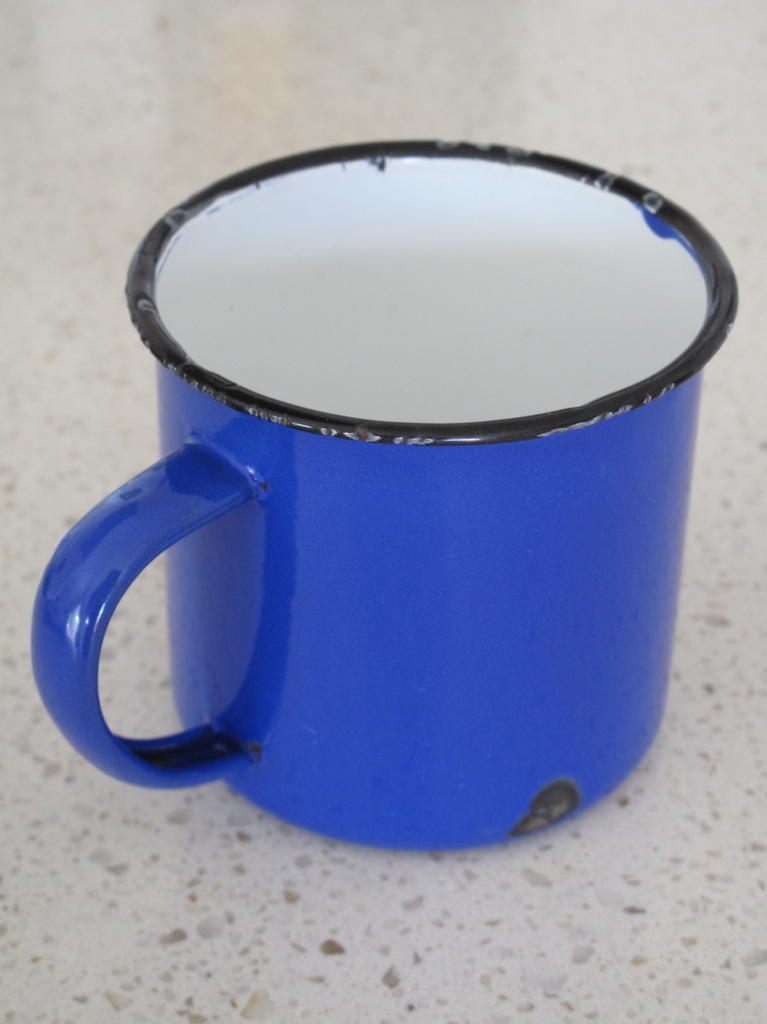
I performed only one task with this mug, a task that could be performed by something else that had multiple uses. Hence this item was just wasting space in my kitchen.

Enamel Mug

Eco Tip for the Day

When doing your weekly shop put a shopping basket in your shopping cart to put your fruit and vegetables in rather than bag everything up separately in plastic bags. I have been doing this for years and only once has the checkout person given me grief about having to weigh it this way.

“In daily life we must see that it is not happiness that makes us grateful, but gratefulness that makes us happy.” Brother David Steindl-Rast

It matters not how fast I go, I hurry faster when I’m slow

Comments (33)

Finding homes for your clutter

A couple of Saturdays ago, you will remember, I asked for people to send in requests for blog posts for me to write about. Everyone who wrote in had wonderful ideas of which I have made a list and will most certainly address each and every one of them in the near future.

I received the following request from Nicole which I felt needed addressing sooner rather than later. Although I can’t comment on the intricacies of her specific area of residence, which is somewhere in France by the way, I can give you all some general ideas that would then have to be translated into actual possibilities in your specific areas. It is much easier for you to do the ground work and to investigate the local possibilities but perhaps my suggestions will give you a starting point.

Here is Nicole’s comment…
“As for me, decluttering is time consuming, so from time to time I just throw things away instead of selling or giving them. I am not well organised, and in France we are not used to garage sales, we have what we call “vide -greniers” for a whole village, so I may have to wait quite a while for it to take place. I’ve just moved and I do not know the local second-hand shops.
Any idea to hep me ?”

Firstly for those who don’t speak French vide-greniers = empty-attics. I kind of like the sound of that. Anyway back to the problem at hand. Below I have put together a list of ideas for ways to find responsible homes for your stuff. Basic ways that with a little imagination could be translated to an opportunity in just about any country in the Western World.

  • Freecycle.org (there a 116 results for places in France alone)
  • Put items out on the street. This is simple ~ make a sign with the word free on (in your own language of course) attach it to the item and put it out on the street. Be a responsible citizen and bring it back in in the evening, if it hasn’t already gone, so it doesn’t look like trash or get ruined by the weather. Put small items in a box.
  • Instigate a Free Box for your apartment block or in the foyer of a public housing building. Same concept as the idea above only indoors. Communal give away if you like. If there is no notice board leave give away /sell signs near the apartment mail boxes.
  • Thrift store and secondhand stores. This one is self explanatory and are usually found easily on the internet, your local phonebook or perhaps by asking local citizens.
  • Sell through ebay or similar or advertise locally through newspapers, local notice boards in shopping malls or your apartment block, or other  internet outlet.
  • Have a yard/garage sale ~ even if this isn’t normal for your area, it wasn’t normal anywhere once so why not start a trend. Just set up a table in front of your house or apartment block and see what happens. You may need to check local bylaws to make sure you aren’t breaking any rules. We wouldn’t want you to get arrested.
  • Set up a giveaway, sell or swap facebook page between your friends, family and neighbours.
  • Ask a long time local where there is an community charity nearby that could use your stuff.
  • Ask other locals if their are charity bins in the area.
  • Google or other search engine is a great way to find local opportunities to get rid of your stuff. Just Search for “donate (the item you are donating eg. books) and your town/city.
  • Check out your local government web site, they usually have a section on donating, recycling and local flea markets.
  • Also check out my Recycling /Donating Guide

I personally believe that no matter what I have if it is still in good condition there is someone out there that can use it. Throwing perfectly good things away is just not something I feel right about doing. I imagine I had a good time acquiring much of the things I an now decluttering, in many cases irresponsibly no doubt, so the least I can do is spend the time to find a new home for it once I am done with it. In fact I enjoy the challenge for the most part and feel quite a degree of achievement when I find homes for particularly difficult items. So use your imagination and do what you can to rehouse your stuff.

Today’s Mini Mission

Declutter something you keep because it seems so useful yet you don’t really have a use for it.

Today’s Declutter Item

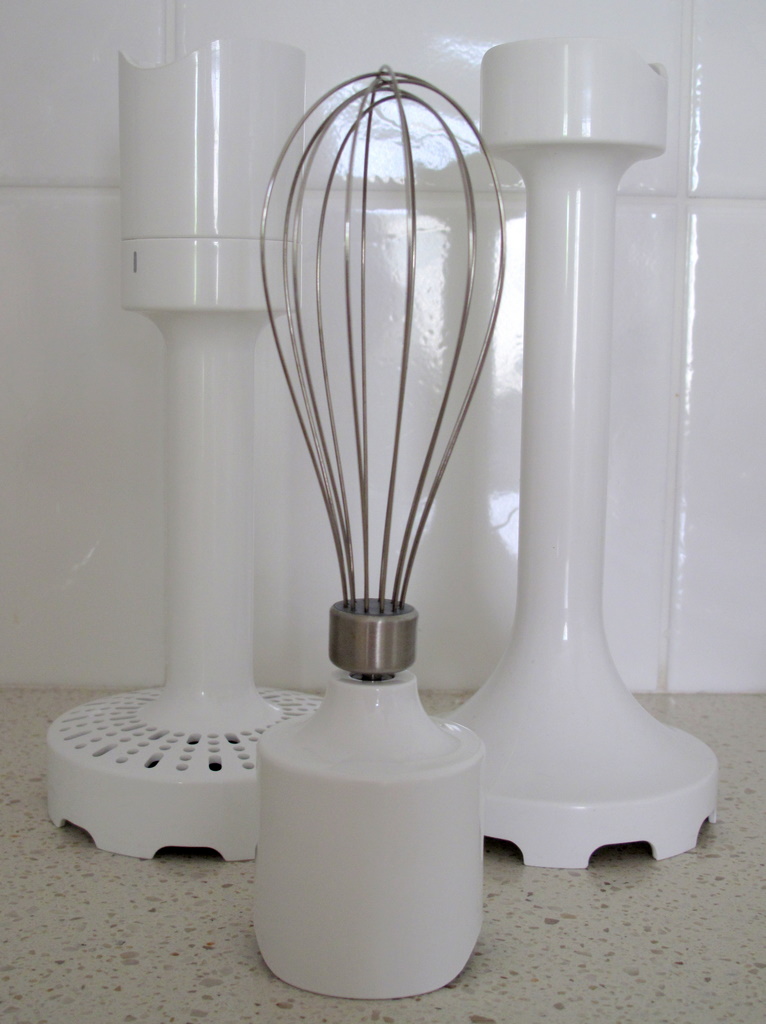
Here is an example of something it took me a while to find a home for. When my immersion blender died of old age I agonised for months over which one to replace it with and finally settled on a Kenwood. Unfortunately clever marketing made it so in order to get the accessories I wanted I was forced to buy the model that had far more accessories than I needed.  I advertised these extra accessories on ebay three times making the starting bid lower and lower every time until I finally hooked someone. I could have Freecycled them but that would have only guaranteed that they would be taken but not necessarily by someone who had a genuine use for them. I figured if they had to be paid for they would more likely find the right home.

Kenwood Mixer Accessories

Something I Am Grateful For Today

The many outlets I have discovered over the last two years that make passing my useful stuff on easily.

“In daily life we must see that it is not happiness that makes us grateful, but gratefulness that makes us happy.” Brother David Steindl-Rast

It matters not how fast I go, I hurry faster when I’m slow

Comments (48)

Cindy’s Weekly Wisdom ~ It’s Not Easy Being Green

Cindy’s Weekly Wisdom

Cindy

Raise your hand if you consider yourself an environmentalist. Mine is up! But as Kermit the Frog says, “It’s not easy being green.”

Being “green” and decluttering often do not feel like they go hand in hand. After all, you might *gasp* throw something away. You might discover that you cannot find another home for an item you no longer want or need. You may have to face up to the fact that you made foolish purchases that you now recognize as being bad for your wallet and bad for the environment.

I was once told that for someone who’s such an aggressive recycler / reuser, I was amazingly good at getting rid of things. Apparently part of how people stay green or  reduce their trash / recycling flow is to reduce their output, simply by hanging onto what they have. Most hoarders probably have very little trash, but that doesn’t make them environmentalists!

I strongly encourage you to find an appropriate new home for anything you no longer want that is reusable. Of course I don’t want you to pitch out perfectly good things, but I also want you to realize that there are somethings for which there may not be another home – somethings are too old, too tired, too broken, and too outdated to be of any continued use.

If you tend to save bits and bobs of things because you just know you’ll be able to do something with it later, you may have to accept that you aren’t going to do anything with your pile of treasures, and neither is anyone else. I recently stumbled into this trap myself. We get prescriptions from Target pharmacy, three of them each month. Target has a really cool design for the prescription bottles, and it includes a rubber-like ring around the neck of the bottle, the yellow band in this photo. Each family member has a different color ring. Sounds like a ingenius idea and when both girls were younger and would sometimes take the same cold medicine, it was really helpful. Here’s the negative: as far as I can tell, they aren’t recyclable, Target won’t take them back, and Target won’t give you a bottle without a ring. So I started saving them. Every time I put a bottle into the recycling, I could have tossed the ring into the bin, but I didn’t. Now I have about 24. I have no stinking idea what to do with them, but now it feels more wrong to throw them away because there are so many of them. I could do something with them. Maybe? Perhaps? Heck if I know. What I know is I can’t think of anything to do with them, and they’re cluttering up my drawer.

Or maybe you actually add to your clutter in your efforts to be a good steward of the environment: you grab a perfectly good item out of bulky trash or from a friend’s discard pile and “rescue it” by hauling it home. Then what? Then does it just sit at your house?  

In the past year, my recycling has gone up astronomically because I started working at a law firm that did not recycle. Now I bring it all home. (Sometimes, frankly, I can’t believe how much of my life is dedicated to refuse of various sorts.) Anything that’s broken, needs to be sold, has a second chance at life, I bring home. Yes, all of it.  But it’s not adding to my clutter, just my workload. The recycling goes directly from the van into the can. I’ve known what I was going to do with every item I brought home before I put it in the van with me: the broken coffee pot went to my daughters’ school for the STEM (science, technology, engineering, and math) class. The teacher likes for the girls to have real world things to take part – like a fancy, computer-controlled broken coffee pot. The nine 3 ft. by 4 ft. presentation boards were offered up free on Craigslist and snapped up by a man who wanted to make a display for his church. The staples for the stapler than broke were taken to the thrift store, and the stapler itself went into the metal recycling.

It’s great to go those extra steps to make the world a better, less cluttered, and less trashed place, so long as it doesn’t add to your own clutter load.

 Today’s Declutter Item

Here is some more obscure clutter. A bunch on old postcards from our USA days. They came to the surface while digging around in Bridget’s clutter last month. I decided to put them in the recycling just like my mat boards yesterday. It is just paper clutter after all.

Postcards

“In daily life we must see that it is not happiness that makes us grateful, but gratefulness that makes us happy.” Brother David Steindl-Rast

It matters not how fast I go, I hurry faster when I’m slow

Comments (43)

I uncomplicated this decluttering effort

One more empty box

Keeping in mind that I have been fitfully decluttering craft supplies for the last two years  today I did something a little outrageous. Well outrageous for me anyway. I threw some perfectly good mat board in the recycling bin. Yes you heard me I threw something perfectly usable in the recycling bin.

The thing is they were also perfectly recyclable but it was a case of faff around with them forever or make an instant decision to get them out of here. I chose the later. You see I have a hard time wasting anything that is even remotely creatively useful and the mat board has been shuffled around in the continuous craft room reshuffle for two years for just that reason and I was over it. In my defence they were small pieces that had limited use but use none the less.

Two entries on Facebook over the last couple of days lead to me make this decision. One was in relation to decluttering unfinished craft projects and the comment or rather question which almost sounded like a plea was this ~ “But what should I do with it?” The second was a status from Mr Green @ My Zero Waste ~ “Morning all; really trying to find energy / motivation to declutter (sans landfill of course!) any tips to ease the butt glue I’m experiencing?”

The former (although possibly about something far more valuable than my mat board) got me thinking that sometimes it just complicates the issue of letting go if you make the letting go too difficult in relation to the objects worth. And the latter says to me that you can’t keep paying for the sins of your past wastefulness by continuing to allow things to be closetfill in a vain attempt to save them from landfill.

Yes I could have put it up for grabs on Freecycle or even cut it into small mats, bundled them up and sold them on ebay. Maybe a craft group or the school up the street could have found a use for them but, chances are, making this effort would probably have resulted in cluttering up someone else space who also can’t let a useful bargain pass them by. After all that is how I acquired them in the first place.

So I did myself a favour for once and saved myself the bother. The time it would have taken to find a new home for them just wouldn’t have been worth the effort. And it’s not as thought they went to land fill. They will be recycled into some other useful paper based product.

Like I said before, I have a hard time parting with stuff that I find to be creatively useful and I probably would have keep passing over these for some time but I had a better use for both the box they were in and the space they were taking up. So I took the bandaid approach to decluttering and ripped those suckers off real fast and out to the recycling bin before I changed my mind. Don’t worry this isn’t something I am going to make a habit of.

Today’s Declutter Item and the subject of today’s post

Mat Board

Something I Am Grateful For Today

I was a little off colour on the weekend but am grateful I am feeling much better today. I am weary after a busy day but I feel well and that is good.

“In daily life we must see that it is not happiness that makes us grateful, but gratefulness that makes us happy.” Brother David Steindl-Rast

It matters not how fast I go, I hurry faster when I’m slow

Comments (105)

Cindy’s Weekly Wisdom ~ Are You Hanging on to Too Many Papers?

Cindy

According to a survey I saw recently, 67% of people said that paper clutter is their hardest area to deal with. Who knows if this is truly accurate, but I’m going to assume that it means that a lot of people, possibly including you, are having trouble dealing with paper.

I think there are a couple of fundamental mistakes that people make regarding paper:

  1. Believing that every piece of paper is important or has the potential to be important
  2. Believing that if a piece of paper was important at one time, it’s important forever
  3. Not intentionally minimizing the amount of paper that enters your life, and
  4. Leaving paper for another day

Let’s deal with these one by one.

1. Every piece of paper is not important. You do not have to read sale ads for shops where you do not shop. You don’t even have to read the sale ads for where you do shop. Bills, once paid, do not need to be kept. Magazine that have been sitting by your chair for six months are clutter, not a treasure. Newspapers more than one or two days old are recycling. Another one is coming today, I promise.

2. Just because a piece of paper was once important doesn’t mean that it continues to be important. I’ll confess, sometimes my desk backs up, just like everyone else’s. It amazes me how many of those once important papers are no longer important once I get around to sorting them: coupons are now invalid, a new bill has come to supplant this one, a receipt for a shirt you thought you might return but have now worn twice, an announcement for a talent show that occurred last month: none of these are important any more. Even papers related to buying a house can be shredded once you’ve refinanced the loan or purchased another house. Your tax papers only need to be kept for 7 years, at the longest. (You can get more specifics at the IRS website.) Every year, you can shred one more year’s worth of tax forms (in the U.S. only; I don’t know about other countries).

3. I’m sure there are more junk mail and more school papers floating around now than there were a dozen years ago. You need to do your very best to stem the tide before it reaches your home.

  1. Aggressively take your name off mailing lists for catalogs and other regular mailings that you do not care to get. All catalogs contain an 800 number; call them. You will not hurt the feelings of the operator for asking to have your name taken off their mailing list.
  2. You can return a charity solicitation in the envelope they send you after you write “please take my name off your mailing list” on the solicitation form. If you feel bad about doing this, put your own stamp on the envelope. I donate annually to two charities through my church. I will donate to them every year, and I know that I will not donate to them at any other time. Every year when I write my check, I write “Please do not add my name to your mailing list.” Why should they waste their time soliciting me when I know I’m not going to give? This helps both of us.
  3. Stop receiving pre-approved credit card offers by using this free service, which was established under the Fair Credit Reporting Act (U.S. only).
  4. The Direct Marketing Association’s (DMA) Mail Preference Service (MPS) lets you opt out of receiving unsolicited commercial mail from many national companies for five years (U.S. only).
  5. This  privacy website has more information on more specialized cases, such a the ValPak you may be getting weekly (Again, U.S. only).
  6. To get off the mailing list of small local companies, like the real estate agent you met last week, you’ll have to email or snail mail them directly. Clip the label off the mailing and include it if you contact them by snail mail. Extra postcards you own are good for this type of correspondence.
  7. Politely refuse business cards, fliers, and appointment cards that are offered to you. Write important information directly into your appointment book, address book, or smart phone, and bypass the paper all together.
  8. Enter the relevant information for important announcements for work or school directly into the same locations (appointment book, smart phone, etc.) so you’re never searching your desk for a vital piece of information on an un-vital piece of paper.
  9. Switch as many bills as possible over to email delivery. There’s no need for you to receive paper bills any more, and they’re easier to track on your computer anyway.
  10. Really consider the mailings you willing let in your home. Do you want the newsletter from the national branch of your church even if you’re a faithful church attendee? How many magazines should you subscribe to? Is there an on-line version instead? If you never manage to read the newspaper, stop your subscription. You may love to shop at Ikea, but do you really need to get their monthly catalog? You know how to find them on-line if you want to see what they have.

4. The last mistake people make is leaving their papers to another day. When you bring in a stack of papers from the car or the mailbox, you should deal with it promptly. At a minimum, junk goes right into the recycling bin. (Yes, even after you do the above steps, there will still be some junk.) Bills are opened and appropriate reminders to pay noted. Personal letters are opened. Envelopes go into the recycling. There’s a place for everything and everything in it’s place, and that place is not a big heap on your entry table, kitchen counter or desk.

Paper is a tool for relaying information; manage it wisely, so it doesn’t manage you.

Today’s Declutter Item

Lena will be pleased to see I have found another craft item to declutter. There are still plenty of craft items to go but they are going, one day at a time.

Another crafting tool

Something I Am Grateful For Today

My husband and children. We may no always conform to the conventional family mould but that is what makes life fun for us. We are anything but boring.

“In daily life we must see that it is not happiness that makes us grateful, but gratefulness that makes us happy.” Brother David Steindl-Rast

It matters not how fast I go, I hurry faster when I’m slow

Comments (34)

Simple Saturday – Complete the Circle

A Simple Saturday Post by Cindy

The thrift store has been quite the topic of conversation this week, hasn’t it? Today I want to look at it from another perspective – completing the circle. If you only donate to the thrift store, and never shop there, you are not completing the circle. Now, for those of you who already like to shop in thrift stores, this is not permission to run out and purchase willy-nilly “because Cindy says it’s a good idea.” No, no, no! The idea behind my list is to give you an idea of all the really great stuff there is available in this world that you can purchase used, without calling on the earth’s resources to manufacture new, and you’ll save yourself a lot of money in the process, as well. Here is a partial list of non-new items in my house, and where I acquired them. As Colleen said earlier this week, I always look to buy used first.

  • 90% of my clothing, 80% of my husband’s clothing, and almost 100% of the children’s clothing are second hand, except for their school uniforms, which are a mixture of new and used, depending on what’s available in the uniform closet. (Thrift stores, EBay, and my youngest gets hand-me-downs from her sister and from her sister’s friend.)
  • Both girls’ bedroom sets, including dressers, beds, and nightstands. (Craigslist)
  • Three upholstered chairs, sofa, love seat, coffee table, and living room art. (Craigslist, thrift store, purchased from neighbor)
  • Tile for kitchen backsplash (never used). (Craigslist)
  • 16 foot sliding door (never used). (Craigslist)
  • Two Anderson sliding glass doors (never used). (Craigslist.)
  • A truckload of wood, now the ceiling of my screen porch. (Craigslist)
  • Two bathroom sinks with faucets. (Craigslist)
  • Wooden desk. (Garage sale)
  • Swing set. (Handed down from neighbor.)
  • Porch chairs. (Found during bulky trash pick up.)
  • Kitchen light fixture. (Habitat Restore, which sells new and used building materials)
  • Window for stairwell. (Habitat Restore.)
  • Rug, sofa, and side table. (Furniture consignment store.)
  • Dining room table. (Top and legs purchased separately at Habitat Restore and assembled by my husband.)
  • Dining room chairs. (Craigslist.)
  • Silver jewelry. (EBay)

There’s more, but that’s enough of a sampling. Nearly every piece of clothing and piece of furniture in this house was purchased second hand. The terrific find of the 16 foot door saved me almost $4000 over the cost of the same door new. I have lived lighter on the environment by purchasing used and second-hand goods, some of which were no longer in their factory container but were, in fact, still new.

It’s important to complete the circle, but remember, you don’t have to do your part and the part of four other people, as well. If shopping at garage sales or thrift stores is a temptation for you, shop with a list, or avoid those stores all together until you are able to control your impulses. Follow this list to make wise buying decisions (starting with “Do I need this item”) and then complete the circle by purchasing used.


Comments (34)

Cindy’s Weekly Wisdom ~ My New Year’s Challenge to You

Cindy’s Weekly Wisdom

Cindy

I love New year’s resolutions, don’t you? Ok, most people really don’t love them, but I do. Because of them, I have (finally!) learned how to use chopsticks, and I (finally!) had a charity party that I’d been intending to have for 4 or 5 years.

And I have one for you this year: Less trash.

It makes me crazy to drive through my neighborhood and see people’s trash cans literally bursting out the top with trash. The City of Austin provides a choice of 3 cart sizes: 32 gallons, 64 gallons, and 96 gallons; each is more expensive than the size before it, although even the largest can is only $30 a month. Trash pick up is weekly. Most people have the middle size can. This is the one I often see stuffed to the top and more.

(For full disclosure: Everyone also has a 96 gallon recycling bin, which is picked up every two weeks. Any amount of yard waste can be put out weekly as long as it is in large paper sacks or trash cans that can be dumped. Yard waste may not be set out in plastic bags. The city has a fantastic program for recycling solid sewage waste and yard trimmings to produce compost, which is used at city-own buildings and parks and is also sold to the public.)

My family of four people and five animals produces a single bag of trash a week. One. Even when the children were little and wore disposable diapers, we only had two bags of trash a week.

How do we do this when others are brimming over? Frankly, I often ask myself how they could possibly have that much trash. It seems impossible to me, although obviously it’s not.

Here’s how I mange it: a place for everything and everything in its place.

I have a trash can in the kitchen, plus a little one in Dan’s office, each girls’ room, and in all four bathrooms. Except for the kitchen trash, the other ones only need to be emptied once a month or so. I have two recycling bins in the kitchen, one in Dan’s office, and one at the end of the hallway by all our bedrooms. I have a tiny compost bucket in the kitchen. I have a plastic bag recycling area in the pantry; metal recycling tub (small) under the kitchen sink; and a box for Styrofoam in the garage.

Yes, that’s a lot of containers, and yes, I do live in a fairly large house, but I did the same when I lived in smaller places.

All the food cans and bottles go into one of the bins in the kitchen. Paper recycling goes into the bin in the office. The basket at the end of the hall is for miscellaneous recycling generated in the bathrooms and bedrooms. The metal bin under the sink is for aluminum foil or any recyclable but non-can metal. Food scraps are dealt with in a number of ways: the compost bin is that last option. I feed leftovers from our plate to the dogs. The guinea pig gets vegetable and fruit trimmings. Fruit that the guinea pig doesn’t eat goes outside to feed the squirrels. (My 9 year old especially loves squirrels, so ours are well cared for.) In the end, only things like egg shells, banana peels, and tea bags end up in the compost bin. Even the cats’ litter is composted: I buy compressed pine pellets for their box and put the used litter in with the yard waste when it needs to be emptied. Since I know this waste will be mixed with sewage and yard trimmings, I don’t worry that there may be some cat feces remaining. The guinea pig’s pine shavings are dumped directly into the garden as mulch.

In addition, things you’re decluttering need a place to go so that they launch into their new life in the best way possible – a gift to a friend, a trip to the thrift store, sold on Ebay. One of the advantages of thing-a-day decluttering is that you have time to make wise choices. Reader Annabelle just packed up from Germany to come back to the US and said it was a breeze due to decluttering in advance, even though the movers came early. Like her, you don’t want to be in a panic at the last minute. That’s when waste occurs.

And remember, I’ve only talked about ways of diminimishing your trash by recycling. There’s a whole other side to this coin: Bringing less into your home. But you already knew that, didn’t you?

With anything you want to succeed with, you have to 1) have a plan and 2) a way of executing that plan. If you don’t have a convenient place to put your recycling, then it won’t get recycled. If you’ve got some recycling that has to be taken to the recycling center and can’t be put in your curb-side bin, then you need a place to store it. This is my New Year’s challenge to you: Can you cut down on your trash by 1/3? By 1/2? I bet you can. Let’s all take a deep breath and say our 2012 mantra together: Less.

Today’s Declutter Item

This is a classic example of if you keep stretchy things for too long unused they will perish. This piece of elastic tubing was something I had to exercise with when I was having back spasms which in turned caused me neck problems. Fortunately I haven’t suffered from that problem for some time now so it is now only good for the trash.
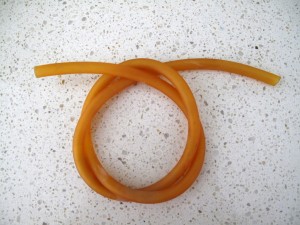
Elastic tubing for physiotherapy

Something I Am Grateful For Today

The pest man has been, the car is serviced, dinner dates are sorted, towels are washed. Things are coming together nicely around here. Hopefully that means that by Sunday all I will have to do is cook, eat, drink and be merry.

“In daily life we must see that it is not happiness that makes us grateful, but gratefulness that makes us happy.” Brother David Steindl-Rast

It matters not how fast I go, I hurry faster when I’m slow

Comments (36)